- Ageproof
- Posts
- Why Spermidine Has Earned a Regular Spot in My Longevity Routine
Why Spermidine Has Earned a Regular Spot in My Longevity Routine

Cara Hayes
March 26, 2025
When you spend as much time as I do sorting through the latest longevity research, you quickly realise most breakthroughs don’t hold up. Spermidine, though, genuinely stood out—not just because of its memorable name, but because the scientific evidence is unusually compelling.
What Exactly Is Spermidine (and Why Should You Care)?
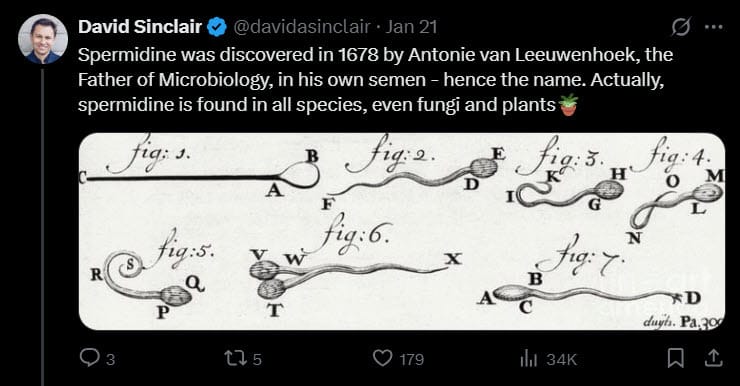
Spermidine is a polyamine found naturally in every cell of your body, vital for activating a powerful process called autophagy—your cells’ internal recycling system. Think of autophagy as your cells regularly clearing out damaged components, keeping them fresh and efficient. As we age, both autophagy and spermidine levels naturally decline, significantly accelerating ageing.
This connection is exactly why researchers are now excited about maintaining optimal spermidine levels.
Here’s What the Science Actually Shows
What impressed me about spermidine is the consistency of evidence across species, including humans. Animal studies first highlighted spermidine’s potential by clearly showing extended lifespan, improved heart health, reduced inflammation, and enhanced cognitive function (Madeo et al., 2018). Crucially, these benefits depended directly on spermidine's ability to enhance autophagy.
But animal data alone isn’t enough. What convinced me further were large epidemiological studies showing that humans who regularly consume spermidine-rich foods (like aged cheeses, wheat germ, mushrooms, and fermented soy) live significantly longer—on average 5-6 years longer—and experience fewer cardiovascular and cognitive diseases compared to those with low intakes (Kiechl et al., 2018).
Controlled human trials are also promising. A small trial found improved memory in older adults who supplemented with spermidine (Schwarz et al., 2018), although larger trials suggest higher doses may be required for optimal benefits (Wirth et al., 2019).
How Spermidine Compares to Other Longevity Compounds
If you’re familiar with longevity research, you'll know about rapamycin, NAD+ boosters (like NR or NMN), and metformin. Each has strengths, but spermidine has unique advantages:
Rapamycin is highly effective at lifespan extension through mTOR inhibition but can cause side effects like immune suppression or metabolic disturbances. Spermidine activates autophagy similarly but without these side effects, making it safer for long-term use.
NAD+ boosters like NR or NMN primarily enhance cellular energy and repair mechanisms. While beneficial for metabolism and energy, they haven’t consistently shown lifespan extension in animal studies. Spermidine consistently extends lifespan in animal models by directly activating autophagy, a crucial ageing pathway NAD+ boosters don't robustly activate.
Metformin, a diabetes drug popularised for its anti-ageing potential, primarily improves metabolic health and insulin sensitivity. Its lifespan extension effects are moderate and inconsistent in healthy animals, though promising for people with metabolic disorders. Spermidine, by contrast, consistently targets fundamental cellular renewal processes, offering broader protection with fewer side effects.
In essence, spermidine complements rather than competes with these compounds, offering unique autophagy-focused benefits that are critical for long-term cellular health.